 4BLOCKS
This song at a glance
| Song | 여우야 여우야 Fox, Fox, What Are You Doing? (a children's tag game song) |
|---|---|
| Style | Question-and-answer game song turned into a K-pop track (2:28) with a 5-member dance crew. One member plays the fox. |
| Grammar | -ㄴ다 / -는다 (I'm doing it now: 잔다 · 한다 · 먹는다) · asking 뭐하니? → 뭐해? → 뭐 하세요? · calling someone with -야 |
| Sounds | 먹는다 [멍는다] · 멋쟁이 [먿쨍이] · 죽었니 [주건니] · 살았니 [사란니] · 살았다 [사랃따] |
| Level | Beginner · good once you can read Hangul |
| Words | 여우 fox · 뭐 what · 하다 to do · 잠 sleep · 자다 to sleep · 잠꾸러기 sleepyhead · 세수 washing your face · 멋쟁이 stylish person · 밥 rice, meal · 먹다 to eat · 무슨 what kind of · 반찬 side dish · 개구리 frog · 죽다 to die · 살다 to live |
| Origin | Came to Korea from Japan about 100 years ago; Korean kids have sung it for generations (more below) |
Full lyrics: Korean, romanization and English
The kids ask, the fox answers, and the kids react. Romanization is only a reading aid (it follows the sound); listen to the song for the real pronunciation.
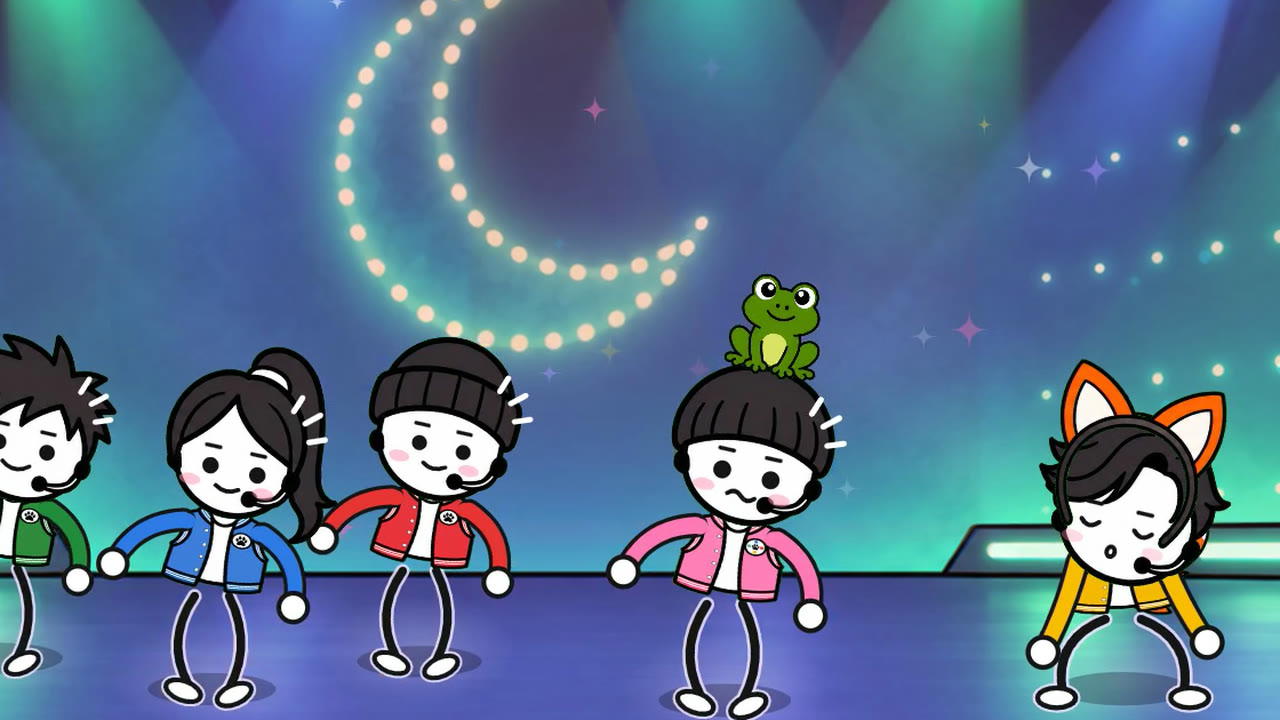
Round 1
Kids여우야 여우야 뭐하니?Yeou-ya yeou-ya mwo-ha-ni?Fox, fox, what are you doing?
Fox잠잔다.Jam-jan-da.I'm sleeping.
Kids잠꾸러기!Jam-kku-reo-gi!Sleepyhead!
Round 2
Kids여우야 여우야 뭐하니?Yeou-ya yeou-ya mwo-ha-ni?Fox, fox, what are you doing?
Fox세수한다.Se-su-han-da.I'm washing my face.
Kids멋쟁이!Meot-jaeng-i!Looking sharp!
Round 3
Kids여우야 여우야 뭐하니?Yeou-ya yeou-ya mwo-ha-ni?Fox, fox, what are you doing?
Fox밥 먹는다.Bap meong-neun-da.I'm eating.
Kids무슨 반찬?Mu-seun ban-chan?What side dish?
Fox개구리 반찬!Gae-gu-ri ban-chan!Frog side dish!
The last question
Kids죽었니? 살았니?Ju-geon-ni? Sa-ran-ni?Dead? Or alive?
Fox살았다!Sa-rat-da!Alive! (Now the fox chases everyone. Run!)
Line by line: what each word means
These are the same colors you see in the music video lyrics. Most of the fox's answers end with an action word (red), and in Korean the action comes last. (개구리 반찬! is the one answer with no verb: just “frog side dish”.)
여우 is a fox. -야 calls a friend, just like 꼬마야 in song #1. 뭐 is “what”, and 하니? comes from 하다 (to do) with the friendly question ending -니?. Together: “What are you doing?”
잠 is “sleep” and 자다 is “to sleep”. 잠자다 is one word that also means “to sleep”, and 잠잔다 means “I'm sleeping.”
잠꾸러기 is someone who sleeps all the time. The ending -꾸러기 means “a person full of…”. (Our maknae earns this one.)
세수 means washing your face, and 세수하다 is “to wash your face”. 세수한다: “I'm washing my face.”
멋 means style or flair, and -쟁이 means “a person who is…”. 멋쟁이! is like saying “Looking sharp!”
밥 is cooked rice, and also “a meal”. 먹다 is “to eat”. 밥 먹는다: “I'm eating (a meal).”
반찬 are the little side dishes served with rice, like kimchi. 무슨 means “what kind of” and describes the noun, so it is green. 무슨 반찬? “What side dish?”
개구리 is a frog. Here it describes what kind of side dish, so it is green. A frog side dish! Yuck!
죽다 is “to die” and 살다 is “to live”. -었-/-았- marks the past, so 죽었니? asks “Have you died?” and 살았니? “Are you alive?”
살았다! “Alive!” In the game, this is the signal to run.
Grammar: -ㄴ다 / -는다, the plain present
Look at the fox's answers: 잔다, 한다, 먹는다. Each one is a single red block. -ㄴ다/-는다 is the plain present ending for action verbs; in the song, the fox uses it to say what it is doing. Take the verb stem (drop 다) and check the last syllable:
| Stem ends in | Add | From the song |
|---|---|---|
| a vowel (no final consonant) | ㄴ다 | 자다 → 잔다 · 하다 → 한다 · 세수하다 → 세수한다 |
| a final consonant (except ㄹ) | 는다 | 먹다 → 먹는다 |
| final ㄹ (ㄹ drops) | ㄴ다 | 살다 → 산다 (not in the song, but good to know) |
This plain ending appears in songs, diaries, books and news. In real conversation, Koreans usually use the -요 form or the casual form instead:
| Song | With friends | Polite |
|---|---|---|
| 잔다 | 자 | 자요 |
| 세수한다 | 세수해 | 세수해요 |
| 밥 먹는다 | 밥 먹어 | 밥 먹어요 |
Three ways to ask “What are you doing?”
| Song (to a child or close friend) | With friends | Polite |
|---|---|---|
| 뭐하니? | 뭐해? | 뭐 하세요? |
Want to see how one verb keeps changing? Try 다 Challenge #1: 먹다, where 먹다 becomes 먹어요, 먹었어요 and more.
Sing it the way it sounds
Korean spelling and sound are not always the same. These five changes are all in the song. (Why does ㅇ go silent? See our ㅇ lesson.)
| You write | You hear | What happens |
|---|---|---|
| 먹는다 | [멍는다] | ㄱ before ㄴ turns into ㅇ: meong-neun-da |
| 멋쟁이 | [먿쨍이] | final ㅅ sounds like ㄷ, and ㅈ gets tense: meot-jjaeng-i |
| 죽었니 | [주건니] | ㄱ slides into 어, and ㅆ before ㄴ turns into ㄴ: ju-geon-ni |
| 살았니 | [사란니] | ㄹ slides into 아, ㅆ + ㄴ → ㄴㄴ: sa-ran-ni |
| 살았다 | [사랃따] | final ㅆ sounds like ㄷ, and 다 gets tense: sa-rat-tta |
Where does this song come from?
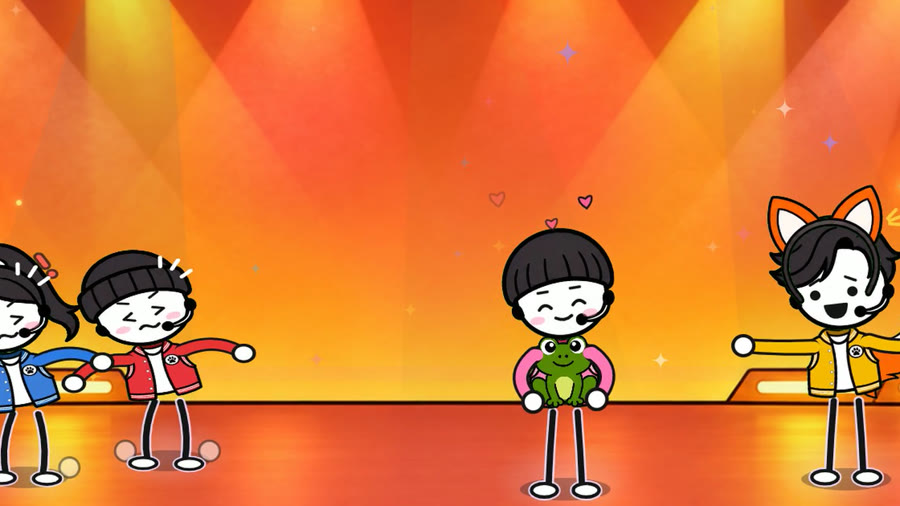
Almost every Korean adult remembers playing 여우야 여우야 in a schoolyard. But the song did not start in Korea. According to the Encyclopedia of Korean Culture (한국민족문화대백과사전, entry “여우놀이”), the game and its song came from Japan, where children play kitsune-san (“Mr. Fox”), and spread in Korea in the early 1900s. Since then it has been sung by Korean kids for generations, with Korean words like 개구리 반찬 that every child knows. The song has no known author.
That is why we call it a classic Korean children's song, not a traditional Korean folk song. The words are simple, the answers are fun, and you can play it with friends in any language class.
Play it: 3 steps
- Watch the music video and copy the crew's moves for each answer: sleep, wash your face, eat, frog, run.
- Be the fox. In the slow sing-along, the crew asks and you answer: 잠잔다 · 세수한다 · 밥 먹는다 · 개구리 반찬 · 살았다.
- Play for real. One person is the fox. Everyone else sings the questions and steps closer. Make up your own answers with -ㄴ다/-는다: 책 읽는다 (I'm reading a book), 노래한다 (I'm singing). When the fox shouts 살았다!, run!
Common mistakes
- 먹다 → 먹ㄴ다. After a final consonant, add 는다: 먹는다, 읽는다. (Only a final ㄹ is different: 살다 → 산다.)
- 자다 → 자는다. No final consonant, so just ㄴ: 잔다.
- Asking an adult 뭐하니? or 뭐해? To a teacher or a stranger, say 뭐 하세요?
- Answering in daily life with 잔다. It sounds like a book or a song. Say 자요 (polite) or 자 (friends).
- Writing it the way it sounds. You hear 멍는다, but you write 먹는다.
10-question practice quiz: 여우야 여우야
Answer in your head or out loud, then tap the box to check.
- What does 여우 mean?
- Which word means “side dish”: 반찬 or 개구리?
- What does 여우야 여우야 뭐하니? mean?
- The fox is sleeping. What does it answer?
- The fox washes its face. The kids shout: ______! (Looking sharp!)
- 밥 ______. (I'm eating.)
- ______ 반찬? (What side dish?)
- Make the song form (-ㄴ다/-는다): 하다 → ?
- Fix the mistake: 밥 먹ㄴ다
- You ask your teacher what she is doing. Which is right: 뭐해? or 뭐 하세요?
Free printable worksheet: Korean children's song lyrics
Four roomy pages: fill in the missing lyrics, match the fox's answers to pictures, color the blocks, make -ㄴ다/-는다 forms, play the fox game with a friend using your own answers, and a 10-question test. The answer key is a separate PDF. Free for self-study, homeschool and classrooms.
FAQ: learn Korean with 여우야 여우야
What does 여우야 여우야 뭐하니 mean?
“Fox, fox, what are you doing?” 여우 = fox, -야 = calling a friend, 뭐 = what, 하니? = are you doing?
Is 여우야 여우야 a traditional Korean song?
Not originally. It came to Korea from Japan (kitsune-san) in the early 1900s, but Korean kids have sung it for generations. No known author.
How do you play the 여우야 여우야 game?
One child is the fox. The others sing the questions and come closer. At 죽었니? 살았니?, the fox shouts 살았다! and chases everyone. Whoever is caught is the next fox.
What does -ㄴ다/-는다 mean in Korean?
The plain present for action verbs: what someone does or is doing. 자다 → 잔다, 하다 → 한다, 먹다 → 먹는다 (살다 → 산다). In conversation, say 자요 / 해요 / 먹어요.
What is the difference between 뭐하니, 뭐해 and 뭐 하세요?
All mean “What are you doing?”. 뭐하니? = gentle, to a child or close friend · 뭐해? = casual · 뭐 하세요? = polite.
Who made this K-pop version?
The lyrics are the children's song-game with no known author, the new melody was made with AI, and the dance video was made by our team (see below).
About this song: 여우야 여우야 is a children's song-game that came to Korea from Japan (kitsune-san) in the early 1900s and has been sung by Korean kids for generations; its author is unknown. Our K-pop version uses those lyrics with a new melody made with Google Flow Music (AI). The 4BLOCKS Crew characters and dance video were made by our team with AI-drawn parts, and the voices are AI.