 4BLOCKS
This rap at a glance
| Song | 체포하겠어, 퇴사할게요 I'll Arrest It, I'm Gonna Quit |
|---|---|
| Mood | A cynical, funny office rap · Monday morning · black-and-white webtoon with red |
| Where the words come from | Two phrases from our K-pop Shorts: 체포하겠어 (ILLIT's song title) and 퇴사할게여 (SOYEON's song title). This rap is an original song. No K-pop lyrics or audio are used. |
| Grammar | -겠어 (I'll…, casual, strong will) · -ㄹ게요 (I'll…, polite, telling my decision) · 반말 vs 존댓말: 응/아니 ↔ 네/아니요 · 안녕히 계세요 vs 안녕히 가세요 · 이다 (이건 범죄야) · N도 그만 |
| Sounds | 월요일을 [워료이를] · 알람을 [알라믈] · 체포하겠어 [체포하게써] · 퇴사할게요 [퇴사할께요] |
| Words | 월요일 Monday · 아침 morning · 알람 alarm · 월세 rent · 야근 overtime · 지하철 subway · 커피 coffee · 월급 salary · 범죄 crime · 회사 company · 이메일 email · 문법 grammar · 체포 arrest · 퇴사 quitting a job |
| Level | Beginner · good after you can read Hangul |
Full lyrics: Korean, romanization and English
Romanization is only a reading aid. Listen to the rap for the real sound (see the sound linking section below).
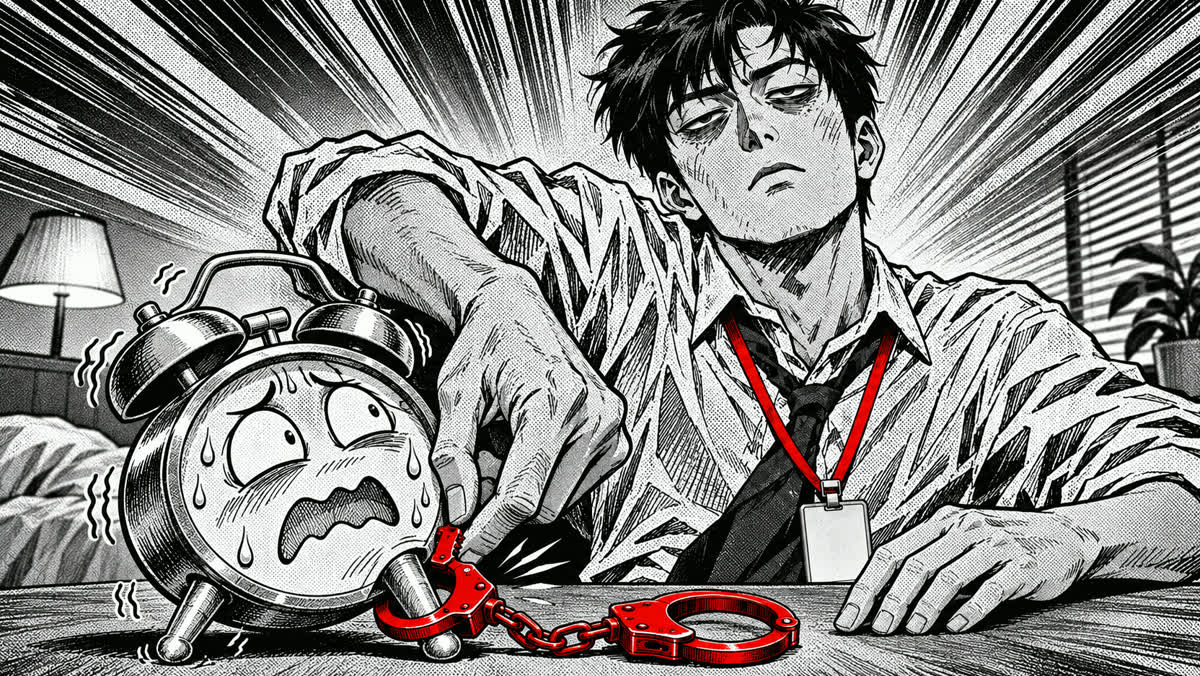
Intro
월요일 아침. 또.Woryoil achim. Tto.Monday morning. Again.
Hook (3 times)
월요일을 체포하겠어Woryoireul chepohagesseoI'll arrest Monday.
알람을 체포하겠어Allameul chepohagesseoI'll arrest the alarm.
월세를 체포하겠어Wolsereul chepohagesseoI'll arrest the rent.
야근을 체포하겠어Yageuneul chepohagesseoI'll arrest overtime.
왜? 그냥. 끝.Wae? Geunyang. Kkeut.Why? Just because. Done.
그래서... 퇴사할게요Geuraeseo... toesahalgeyoSo... I'm gonna quit.
모두 안녕히 계세요Modu annyeonghi gyeseyoBye, everyone. (said by the one leaving)
Verse 1 · angry, casual -어
알람이 또 울려Allami tto ullyeoThe alarm rings again.
여섯 시, 또 울려Yeoseot si, tto ullyeoSix o'clock, ringing again.
지하철은 늦어Jihacheoreun neujeoThe subway is late.
사람은 많아Sarameun manaSo many people.
커피는 비싸Keopineun bissaCoffee is expensive.
월급은 작아Wolgeubeun jagaMy salary is small.
이건 범죄야Igeon beomjoeyaThis is a crime.
그래서, 체포하겠어Geuraeseo, chepohagesseoSo... I'll arrest it.
Verse 2 · quiet, polite -요
오늘 아침, 조용히Oneul achim, joyonghiThis morning, quietly,
회사에 말할게요Hoesae malhalgeyoI'll tell the company.
이메일도 그만Imeildo geumanNo more emails.
야근도 그만Yageundo geumanNo more overtime.
알고리즘도 그만Algorijeumdo geumanNo more algorithm.
문법도... 조금만Munbeopdo... jogeummanGrammar... just a little.
저는 퇴사할게요Jeoneun toesahalgeyoI'm gonna quit.
모두 안녕히 계세요Modu annyeonghi gyeseyoBye, everyone.
Bridge · two moods crash
체포하겠어! / 아니요, 퇴사할게요Chepohagesseo! / Aniyo, toesahalgeyoI'll arrest it! / No, I'm gonna quit. (twice)
화가 나? 응.Hwaga na? Eung.Angry? Yeah.
피곤해? 응.Pigonhae? Eung.Tired? Yeah.
그래서 웃으면서 / 안녕히 계세요Geuraeseo useumyeonseo / annyeonghi gyeseyoSo with a smile, goodbye.
Outro
모두... 안녕히 계세요. ... 내일 봐요.Modu... annyeonghi gyeseyo. ... Naeil bwayo.Bye... everyone. ... See you tomorrow.
Line by line: the 4 blocks of each lyric
Every Korean sentence is built from 4 kinds of blocks, and the action word always comes last, in the 다 slot. The small tag tells you the slot: 은 (who or what), 을 (the object), 로 (where, when, how) and 다 (the action). A dashed block is a word Korean leaves out.
월요일 is Monday, and 을 marks it as the thing being arrested. 체포 is “arrest”, 하다 makes it a verb, and -겠어 adds a strong “I'll do it!” Swap the blue block and the hook keeps going: 알람을 (the alarm), 월세를 (the rent), 야근을 (overtime). After a vowel the marker is 를: 월세를.
알람 is an alarm. 또 means again, a very cynical little word. 울려 means “it rings”, in casual speech.
지하철 is the subway, and 늦어 means “is late”. In Korean a describing word can sit in the 다 slot by itself: no “is” needed. The same goes for 사람은 많아 (so many people), 커피는 비싸 (coffee is expensive) and 월급은 작아 (my salary is small).
이건 is short for 이것은, “this”. 범죄 is a crime. To say “A is B”, put 이다 after the noun: 범죄 + 이야 = 범죄야 (casual). The polite version is 범죄예요.

오늘 아침 is this morning. 조용히 means quietly. 회사 is the company, and 에 means “to”. 말할게요 means “I'll tell (you)”. Now he is calm, so every line ends in polite 요.
도 means “too, also”, and 그만 means “enough, stop”. N도 그만 = “no more N either”: 야근도 그만, 알고리즘도 그만. And then the joke: 문법도... 조금만, “grammar... just a little.” He can't quit Korean grammar!
저 is the humble, polite “I”. 퇴사 means leaving a company. 퇴사할게요 = “I'm gonna quit”, said politely to the company.
화가 나 is “anger comes out”, the Korean way to say “I'm angry”. 피곤해? means “tired?” The answer 응 is a casual “yeah”.
웃으면서 means “while smiling”. 안녕히 계세요 is “stay well”, the goodbye of the person who leaves. 모두 in front means everyone.
The punchline. 내일 is tomorrow, and 봐요 means “see you”. After all that, he will be back at his desk tomorrow.
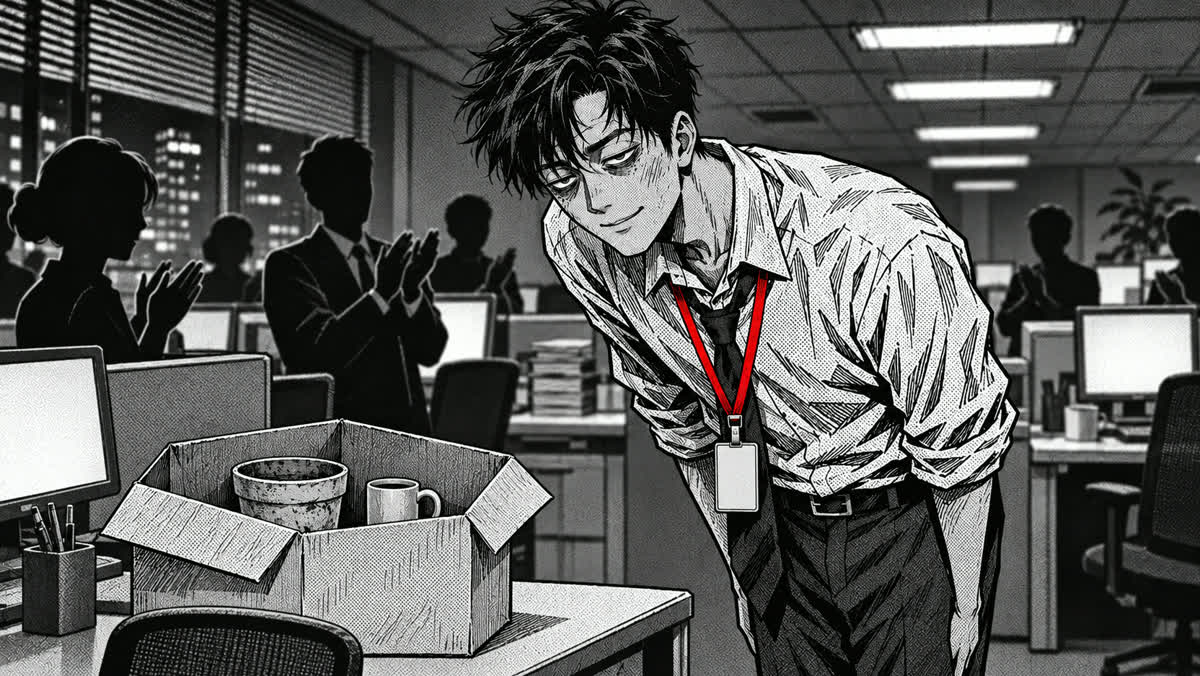

Grammar 1: -겠어 vs -ㄹ게요, two ways to say “I'll…”
The whole rap is a fight between two endings. Both are noun + 하다 + my will, and both are only for the speaker's own action. The difference is the feeling and who you are talking to.
| 체포하겠어 | 퇴사할게요 | |
|---|---|---|
| Built from | 체포 + 하다 + -겠어 | 퇴사 + 하다 + -ㄹ게요 |
| Feeling | Strong, firm will: “I'm going to do it!” | Telling the listener my decision: “I'm gonna…” |
| Speech level | 반말 (casual): to yourself or friends | 존댓말 (polite): to your company, to people you respect |
| Other form | 체포하겠어요 (polite) | 퇴사할게 (casual) |
Make your own with any noun + 하다 verb: 공부하겠어 (I'll study, I'm determined!), 전화할게요 (I'll call you). After a consonant, -ㄹ게요 becomes -을게요: 먹을게요 (I'll eat).
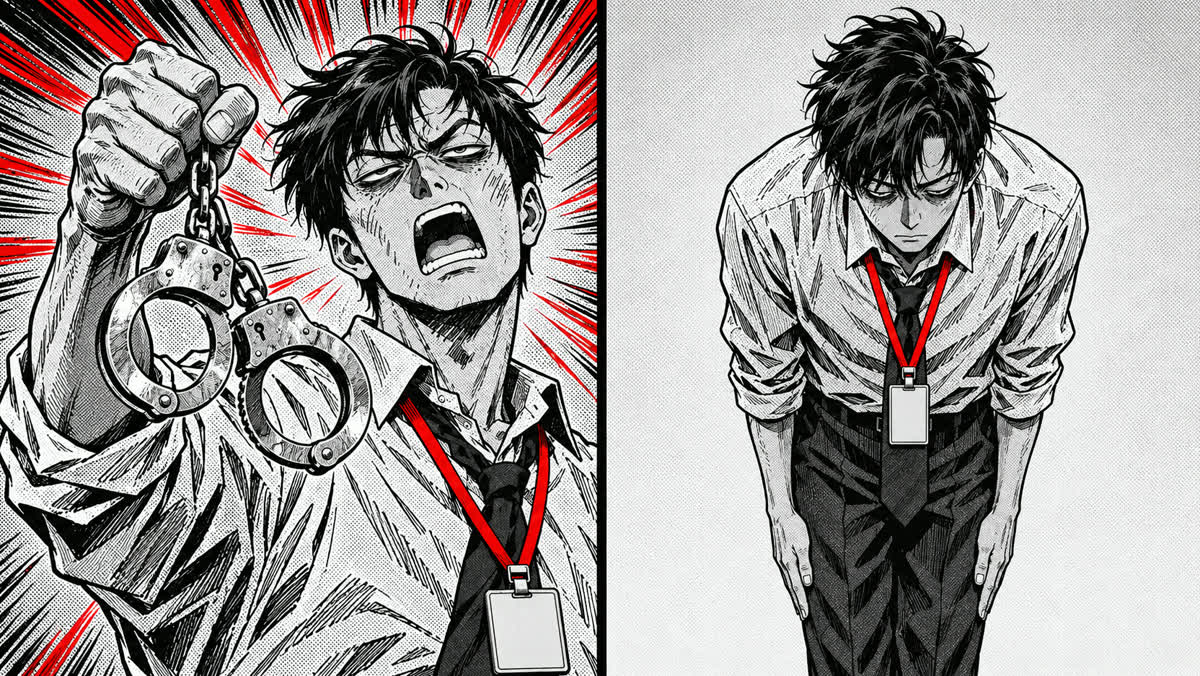
Grammar 2: casual vs polite Korean (반말 and 존댓말)
Listen to the two verses. In verse 1 he is angry, so every line is casual: 울려, 늦어, 많아, 비싸, 작아, 범죄야. In verse 2 he calms down and speaks politely: 말할게요, 퇴사할게요, 계세요. The bridge mixes them on purpose: the casual “yeah” 응 and the polite “no” 아니요.
| Casual (반말) | Polite (존댓말) | English |
|---|---|---|
| 응 | 네 | yes / yeah |
| 아니 | 아니요 | no |
| 늦어 | 늦어요 | it's late |
| 범죄야 | 범죄예요 | it's a crime |
| 나 | 저 | I |
Rule of thumb for beginners: use the polite -요 form with anyone you just met. Save 반말 for close friends, or for shouting at your alarm clock.
Grammar 3: 안녕히 계세요 vs 안녕히 가세요
Korean has two goodbyes, and they depend on who is leaving. 안녕히 계세요 means “stay well”: you say it when you leave and the other person stays. 안녕히 가세요 means “go well”: you say it when the other person leaves. Our office worker walks out with his box, so he says 모두 안녕히 계세요 to everyone who stays. If his coworkers answered, they would say 안녕히 가세요. And the twist at the end, 내일 봐요 (see you tomorrow), is the opposite of goodbye forever.
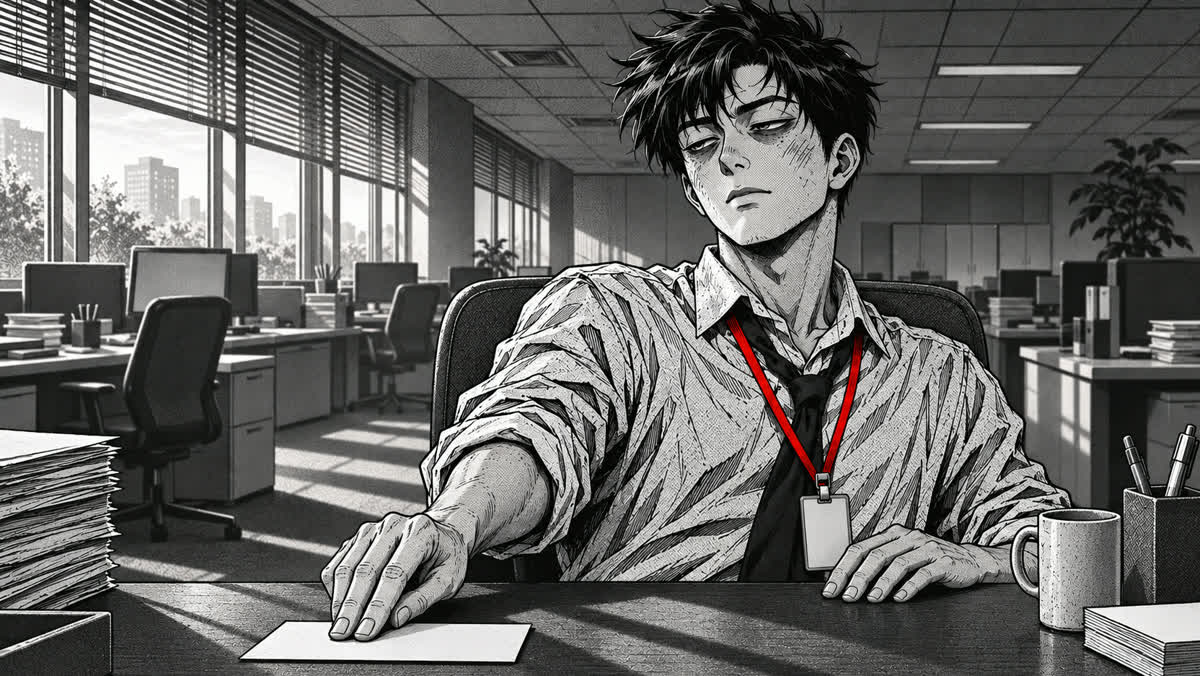
Korean sound linking (연음): rap it the way it sounds
When a syllable ends in a consonant and the next one starts with the silent ㅇ, the consonant slides over. (Why is ㅇ silent? See our ㅇ lesson and the Korean Alphabet Chart.) Rap is fast, so linking is everywhere:
| You write | You hear | What happens |
|---|---|---|
| 월요일을 | [워료이를] | ㄹ slides into 요, and ㄹ into 을 |
| 알람을 | [알라믈] | ㅁ slides into 을 |
| 야근을 | [야그늘] | ㄴ slides into 을 |
| 월급은 | [월그븐] | ㅂ slides into 은 |
| 체포하겠어 | [체포하게써] | the double ㅆ slides into 어 |
| 퇴사할게요 | [퇴사할께요] | after ㄹ, 게요 sounds like 께요 |
| 안녕히 계세요 | [안녕히 게세요] | 계 is usually said like 게 |
Keep the spelling when you write: 퇴사할게요, never 퇴사할께요. Follow the sound when you rap. You will hear the same thing in our healing ballad #1: 기다릴게요 [기다릴께요].
Common mistakes
- Using 퇴사 for anything except a job. 퇴사 means leaving a company. “Quit coffee” is not 커피에 퇴사해요. Use 그만: 커피도 그만.
- Using -겠어 or -ㄹ게요 for other people. 친구가 퇴사할게요 is wrong. These endings are only for “I”: 제가 퇴사할게요.
- Saying 체포하겠어 to your boss. It is 반말. To a boss it would be 체포하겠어요... but maybe don't arrest your boss.
- Mixing up the goodbyes. Leaving? 안녕히 계세요. Someone else leaving? 안녕히 가세요.
- Writing 께요. It sounds like 께요, but you write -ㄹ게요.
10-question practice quiz: 체포하겠어, 퇴사할게요
Answer in your head or out loud, then tap the box to check.
- What does 월요일을 체포하겠어 mean?
- What does 퇴사할게요 mean?
- Which word means “overtime”: 야근 or 월세?
- 알람____ 체포하겠어. (을 or 를?)
- Casual or polite: 체포하겠어?
- The polite way to say 응 (yeah) is ____.
- You are leaving the office. Do you say 안녕히 계세요 or 안녕히 가세요?
- 이건 범죄____. (This is a crime, casual)
- How does 퇴사할게요 sound?
- “No more emails” in Korean?
Free printable worksheet: learn Korean with a rap
Four roomy pages: fill in the missing rap lyrics, match Korean and English lines, sort casual and polite lines, write how each word sounds (연음), build your own -겠어 and -ㄹ게요 sentences, choose the right goodbye, and a 10-question test. The answer key is a separate PDF. Free for self-study and classrooms.
FAQ: learn Korean with this rap
What does 체포하겠어 mean?
“I'll arrest (it).” 체포 = arrest, 하다 = do, -겠어 = a casual, strong “I'll…”.
What does 퇴사할게요 mean?
“I'm gonna quit (my job).” 퇴사 = leaving a company, -ㄹ게요 = a polite “I'll…” that tells the listener your decision.
What is the difference between -겠어 and -ㄹ게요?
Both are “I'll…” for your own action. -겠어 feels firm and here is casual. -ㄹ게요 tells the listener what you will do and here is polite.
When do you say 안녕히 계세요 and when 안녕히 가세요?
안녕히 계세요 when you leave and they stay. 안녕히 가세요 when they leave.
Is this a K-pop song?
No. It is an original rap for learners that borrows two everyday phrases from our K-pop Shorts. No K-pop lyrics or audio are used.
About this song: 체포하겠어, 퇴사할게요 is an original rap made for learners. The words 체포하겠어 (ILLIT) and 퇴사할게여 (SOYEON) come from our K-pop Shorts, but no K-pop lyrics or audio are used. Lyrics written by our team with AI help, music made with Google Flow Music (AI), webtoon illustrations and voices made with AI.