 4BLOCKS
This rap at a glance
| Song | 초를 불어, 묻지 말아줘요 Blow Out the Candles, Please Don't Ask |
|---|---|
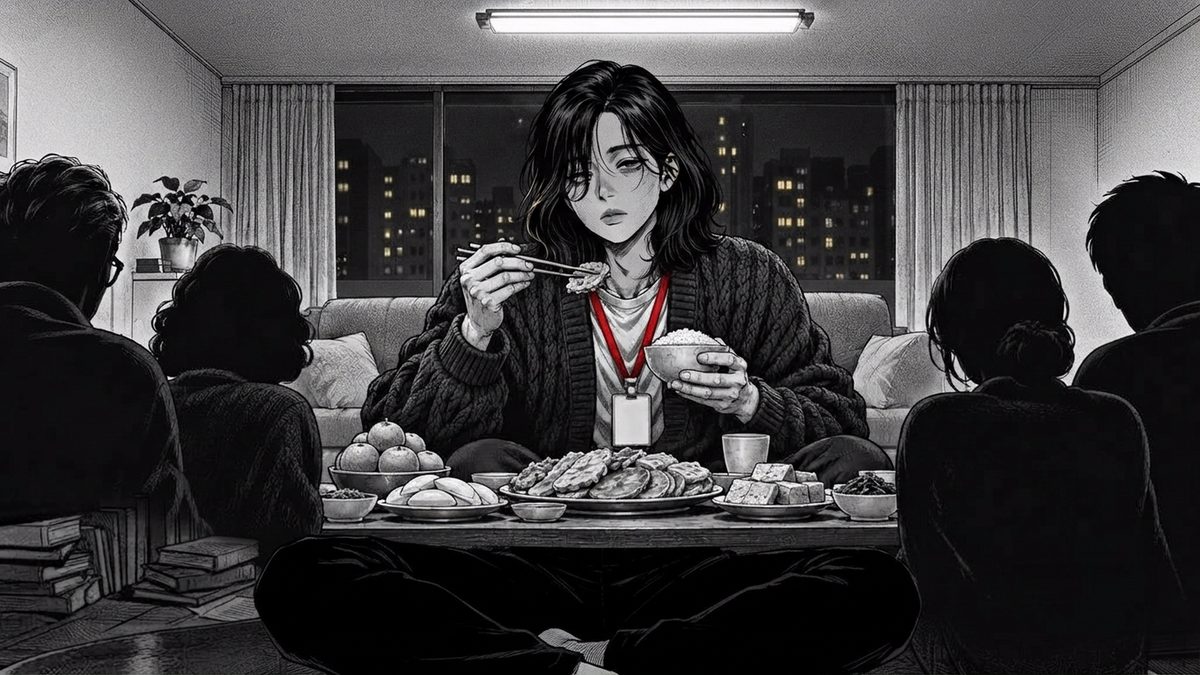
| Story | Park Daeri (Kim Daeri's coworker, same rank) has a birthday, a holiday dinner full of questions, and a dream of running far away |
| Mood | A dry, cynical, funny birthday rap · black-and-white webtoon with red |
| Where the words come from | Three phrases from our K-pop Shorts: 초를 불어 (NMIXX, 긴 소원) and 묻지 말아줘요 · 멀리 달아나요 (PLAVE, 꾼). This rap is an original song. No K-pop lyrics or audio are used. |
| Grammar | -어 casual command (불어!) · -지 말아줘요 (please don't) · 을/를 and 은/는 · N도 더 (more N, too) · N도 그대로 (N stays the same) · 까지 (up to) · 만 (only) · 반말 vs 존댓말 |
| Sounds | 초를 불어 [초를 부러] · 묻지 [묻찌] · 말아줘요 [마라줘요] · 달아나요 [다라나요] · 월급을 [월그블] |
| Words | 생일 birthday · 초 candle · 나이 age · 집세 rent · 야근 overtime · 걱정 worry · 월급 salary · 계획 plan · 미래 future · 소원 wish · 현실 reality · 통장 bank account · 연애 dating · 결혼 marriage · 몸무게 weight · 점수 score · 공항 airport · 바다 sea · 산 mountain · 달 moon · 회사 company, office |
| Level | Beginner · good after you can read Hangul |
Full lyrics: Korean, romanization and English
Romanization is only a reading aid. Listen to the rap for the real sound (see the sound linking section below).
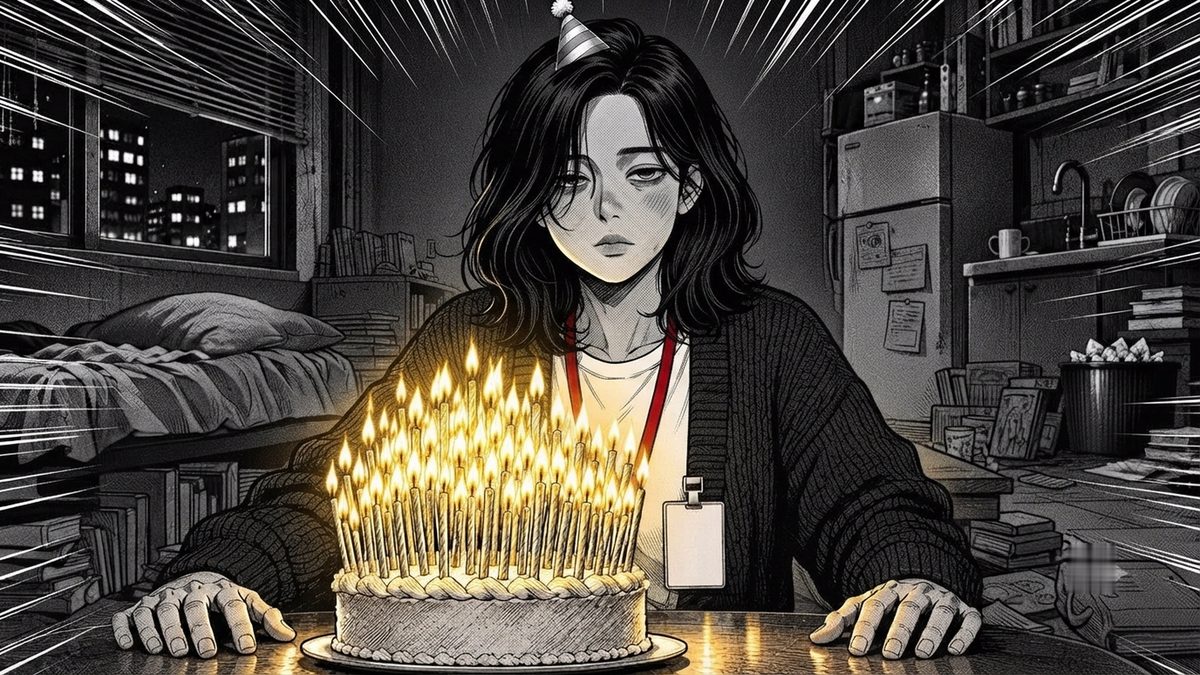
Intro
생일 아침. 또.Saengil achim. Tto.Birthday morning. Again.
Hook (3 times)
초를 불어, 나이도 더Choreul bureo, naido deoBlow out the candles. Another year older, too.
초를 불어, 집세도 더Choreul bureo, jipsedo deoBlow out the candles. More rent, too.
초를 불어, 야근도 더Choreul bureo, yageundo deoBlow out the candles. More overtime, too.
초를 불어, 걱정도 더Choreul bureo, geokjeongdo deoBlow out the candles. More worries, too.
나이를 묻지 말아줘요Naireul mutji marajwoyoPlease don't ask my age.
월급을 묻지 말아줘요Wolgeubeul mutji marajwoyoPlease don't ask my salary.
계획을 묻지 말아줘요Gyehoegeul mutji marajwoyoPlease don't ask my plans.
미래를 묻지 말아줘요Miraereul mutji marajwoyoPlease don't ask about my future.
그래서... 멀리 달아나요Geuraeseo... meolli daranayoSo... I run far away.
Verse 1 · birthday, casual -아
초는 많아Choneun manaSo many candles.
나이는 많아Naineun manaI'm old. (literally: my age is a lot)
걱정은 많아Geokjeongeun manaSo many worries.
일은 많아Ireun manaSo much work.
소원도 그대로Sowondo geudaeroThe wish: the same.
현실도 그대로Hyeonsildo geudaeroReality: the same.
월급도 그대로Wolgeupdo geudaeroMy salary: the same.
통장도 그대로Tongjangdo geudaeroMy bank account: the same.
Verse 2 · holiday dinner, polite -요
저는 조용히 앉아요Jeoneun joyonghi anjayoI quietly sit.
저는 조용히 먹어요Jeoneun joyonghi meogeoyoI quietly eat.
저는 조용히 웃어요Jeoneun joyonghi useoyoI quietly smile.
저는 조용히 일어나요Jeoneun joyonghi ireonayoI quietly stand up.
연애를 묻지 말아줘요Yeonaereul mutji marajwoyoPlease don't ask about my love life.
결혼을 묻지 말아줘요Gyeolhoneul mutji marajwoyoPlease don't ask about marriage.
몸무게를 묻지 말아줘요Mommugereul mutji marajwoyoPlease don't ask my weight.
점수를 묻지 말아줘요Jeomsureul mutji marajwoyoPlease don't ask my scores.
Verse 3 · short questions, a long escape
나이는? 몰라.Naineun? Molla.Your age? Don't know.
월급은? 몰라.Wolgeubeun? Molla.Your salary? Don't know.
연애는? 몰라.Yeonaeneun? Molla.Your love life? Don't know.
계획은? 몰라.Gyehoegeun? Molla.Your plans? Don't know.
멀리, 공항까지 달아나요Meolli, gonghangkkaji daranayoFar away, I run to the airport.
멀리, 바다까지 달아나요Meolli, badakkaji daranayoFar away, I run to the sea.
멀리, 산까지 달아나요Meolli, sankkaji daranayoFar away, I run to the mountains.
멀리, 달까지 달아나요Meolli, dalkkaji daranayoFar away, I run to the moon.
Outro
소원이 뭐야?Sowoni mwoya?What's your wish?
...묻지 말아줘요. 멀리 달아나요....Mutji marajwoyo. Meolli daranayo....Please don't ask. I run far away.
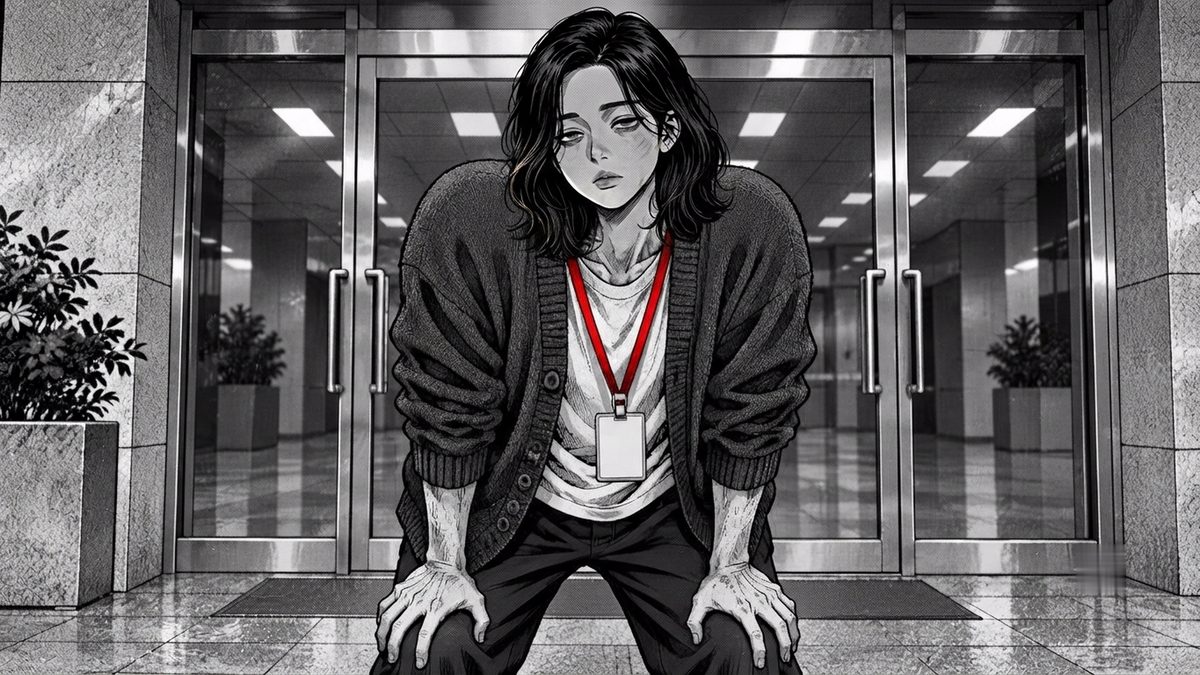
...회사까지만....Hoesakkajiman....Only as far as the office.
Line by line: the blocks of each lyric
Every Korean sentence is built from blocks. In a basic sentence the predicate comes at the end, in the 다 slot: a verb, a describing word, or a noun with 이다, the Korean be-verb. Some rap lines leave it out. In this rap every word gets its color: blue for nouns, red for verbs, green for describing words and yellow for how, when and where. The small white chips are particles like 을/를, 은/는, 도, 까지 and 만. They attach directly to the word in front, with no space, and show its job or add a meaning. A dashed block is a word Korean leaves out.
초 is a candle, and 를 marks it as the thing you blow. 불다 means to blow: drop the 다, add 어, and you get 불어. Said to a friend, it is a casual command, “Blow!” Here is the fun part: the same 불어 can also mean “I blow”, because casual Korean uses one form for both. Your tone tells the difference.
The cynical half of the hook. 도 means “too”, and 더 means “more”. 나이도 더: more age, too. Swap the blue block and every candle brings something else: 집세도 더 (more rent), 야근도 더 (more overtime), 걱정도 더 (more worries).
묻다 is to ask. -지 말다 means don't. -아 주다 means “for me” and turns an order into a favor. 요 makes it polite. Put together: 묻지 말아줘요, “please don't ask.” In front goes the thing you don't want asked, with 을 or 를: 월급을 (my salary), 계획을 (my plans), 미래를 (my future).
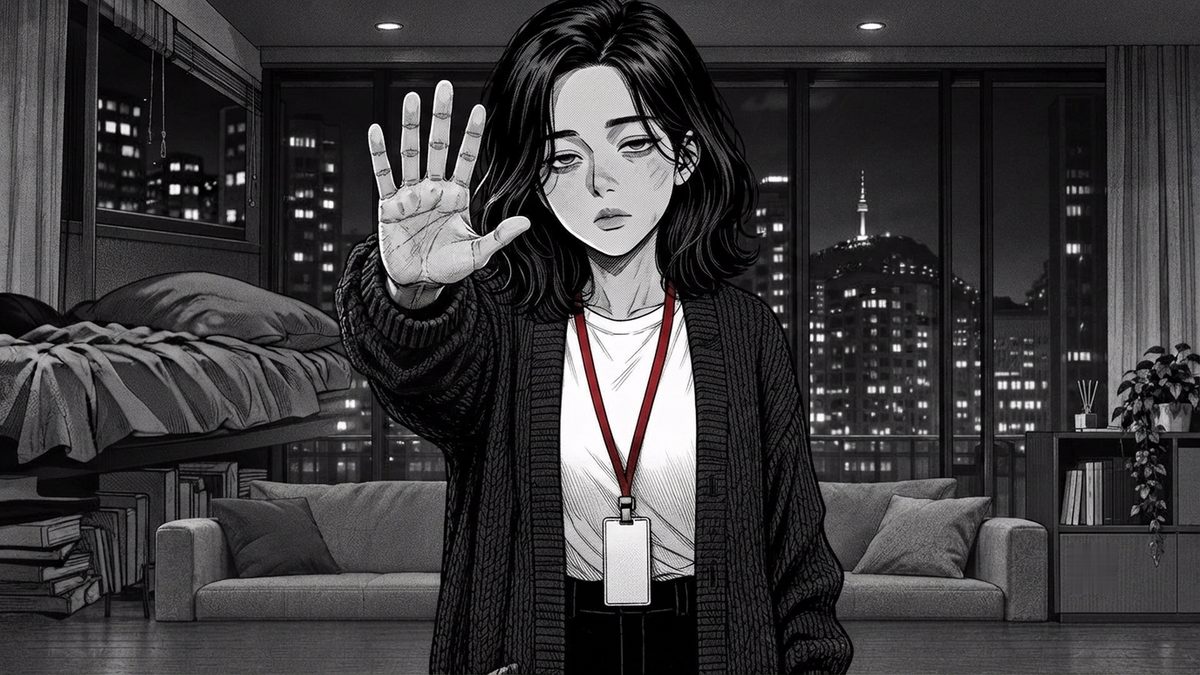
멀리 means far. It tells us how she runs, so it is a yellow block. 달아나다 is to run away, and 달아나요 is the polite present: “I run away.”
Verse 1 uses one frame four times: ___는/은 많아. 많아 is a describing word (many, a lot), and in Korean it can sit in the 다 slot by itself. 나이는 많아 literally says “my age is a lot”: I'm old. Then 걱정은 많아 (so many worries) and 일은 많아 (so much work).
그대로 means “just as it was, unchanged”. 소원도 그대로, 현실도 그대로, 월급도 그대로, 통장도 그대로: the wish, reality, the salary and the bank account all stay exactly the same as last year.
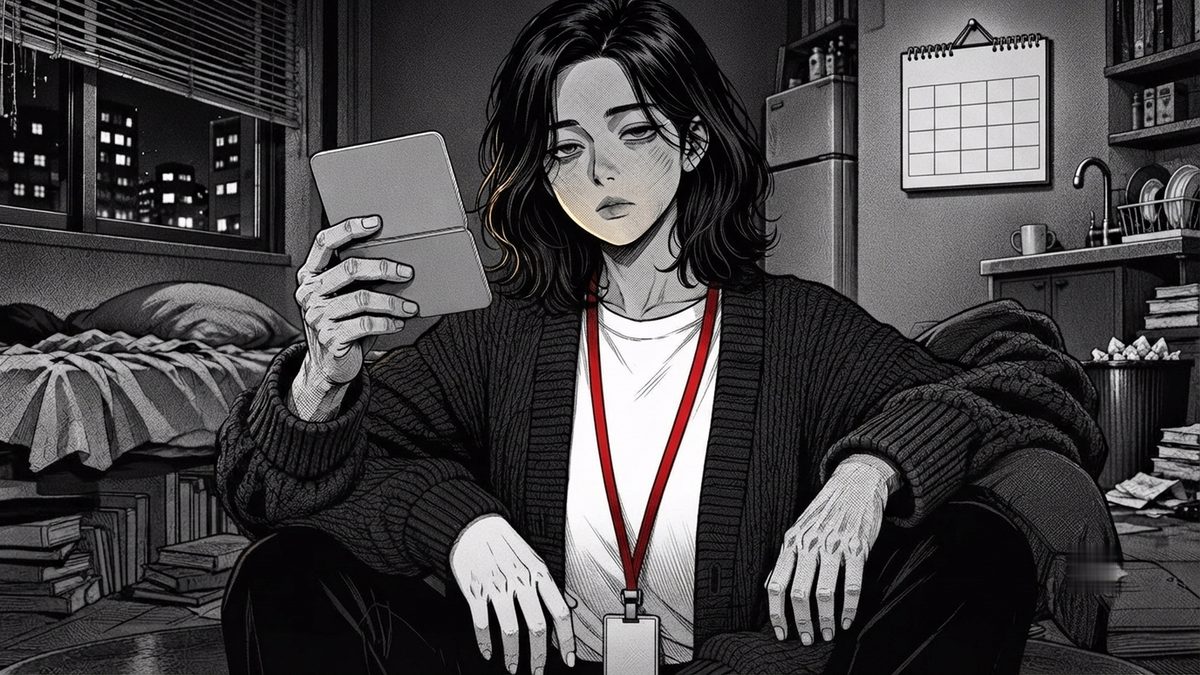
Verse 2 is a big holiday dinner, like Chuseok, and now every line is polite. 저 is the humble “I”, 조용히 means quietly, and the red block changes: 앉아요 (sit), 먹어요 (eat), 웃어요 (smile), 일어나요 (stand up). Then the questions arrive: 연애를, 결혼을, 몸무게를, 점수를 묻지 말아줘요.
Verse 3 is short and casual. Someone asks with just a noun and 는/은: 나이는? (your age?). The answer is 몰라, a casual “I don't know”, from 모르다.
까지 means “up to, as far as”. 공항까지 is “to the airport”. The whole chunk tells where she runs to, so it works like a how-far phrase for the verb, but inside it 공항 is still a blue noun. She keeps going: 바다까지 (to the sea), 산까지 (to the mountains), 달까지 (to the moon).
The punchline. 만 means “only”. 회사까지만: only as far as the office. After the airport, the sea and the moon, she runs... to work. Again.

Grammar 1: 불어 vs 묻지 말아줘요, a command and a “please don't”
The rap is built on two opposite kinds of sentences. One tells someone to do something. The other politely asks someone not to.
| 초를 불어 | 묻지 말아줘요 | |
|---|---|---|
| Built from | 불다 + -어 | 묻다 + -지 말다 + -아 주다 + 요 |
| Meaning | Blow! (do it) | Please don't ask. (don't do it, for me) |
| Speech level | 반말 (casual): to a friend or a child | 존댓말 (polite): to relatives, coworkers, people you respect |
| Other form | 불어요 (polite) | 묻지 말아줘 (casual) |
Park Daeri needs both on her birthday: blow out the candles, then please don't ask.
Grammar 2: how to say “don't” in Korean (-지 마, -지 마세요, -지 말아줘요)
To tell someone not to do something, add -지 말다 to the verb stem. How you finish it decides how strong or soft it sounds:
| Korean | Feeling | English |
|---|---|---|
| 묻지 마 | casual, direct | Don't ask. |
| 묻지 마세요 | polite | Please don't ask. |
| 묻지 말아줘요 | polite, asking as a favor to me | Please don't ask (for my sake). |
It works with any action verb: 가지 마 (don't go), 먹지 마세요 (please don't eat). In the rap, 말아줘요 is written together; standard spelling also allows a space, 말아 줘요.
Grammar 3: 을 or 를? 은 or 는?
Both pairs follow the same rule: look at the last letter of the word in front.
| Word ends in… | Object (을/를) | Topic (은/는) |
|---|---|---|
| a final consonant | 월급을 · 계획을 · 결혼을 | 걱정은 · 일은 · 월급은 |
| a vowel | 나이를 · 미래를 · 점수를 | 초는 · 나이는 · 저는 |
And the speech levels: verse 1 uses casual forms like 많아, and verse 3 answers with casual 몰라. At the holiday dinner she is polite, and every line ends in 요 (앉아요, 먹어요, 묻지 말아줘요). Rule of thumb for beginners: use the polite -요 form with anyone you just met.
Korean pronunciation: sound linking (연음) and tense sounds
When a syllable ends in a consonant and the next one starts with the silent ㅇ, the consonant slides over. (Why is ㅇ silent? See our ㅇ lesson and the Korean Alphabet Chart.) Rap is fast, so linking is everywhere. One more change in this rap is a tense sound: after ㄷ, ㅈ is pronounced like a strong ㅉ.
| You write | You hear | What happens |
|---|---|---|
| 초를 불어 | [초를 부러] | ㄹ slides into 어 |
| 묻지 | [묻찌] | not linking: after ㄷ, ㅈ becomes a tense ㅉ |
| 말아줘요 | [마라줘요] | ㄹ slides into 아 |
| 달아나요 | [다라나요] | ㄹ slides into 아 |
| 월급을 | [월그블] | ㅂ slides into 을 |
| 연애를 | [여내를] | ㄴ slides into 애 |
| 일은 많아 | [이른 마나] | ㄹ slides into 은, and ㅎ in 많 goes silent |
Keep the spelling when you write: 묻지 말아줘요, never 묻찌 마라줘요. Follow the sound when you rap. Linking showed up in Korean Rap #1 too: 월요일을 [워료이를].
Common mistakes
- Forgetting 을/를 before 묻지 말아줘요. In casual speech people drop it, but as a beginner say it: 나이를 묻지 말아줘요.
- Picking the wrong particle. 월급를 is wrong: 월급 ends in a consonant, so it is 월급을. 나이을 is wrong: it is 나이를.
- Using 불어 with your boss. It is 반말. For a clear polite request, say 초를 부세요. 불어요 is also polite, but it can be a statement or a request depending on context.
- Using -지 말아줘요 with describing words. -지 말다 is for actions. “Don't be sad” is usually said another way, like 슬퍼하지 마.
- Writing the sounds. It sounds like 묻찌 and 다라나요, but you write 묻지 and 달아나요.
10-question practice quiz: 초를 불어, 묻지 말아줘요
Answer in your head or out loud, then tap the box to check.
- What does 초를 불어 mean?
- What does 묻지 말아줘요 mean?
- Which word means “salary”: 월급 or 통장?
- 계획____ 묻지 말아줘요. (을 or 를?)
- 미래____ 묻지 말아줘요. (을 or 를?)
- 걱정____ 많아. (은 or 는?)
- Casual or polite: 저는 조용히 앉아요?
- What does 회사까지만 mean?
- How does 묻지 sound?
- “Far away, I run to the sea” in Korean?
Free printable worksheet: learn Korean with a rap
Five roomy pages: fill in the missing rap lyrics, match Korean and English lines, choose 을/를 and 은/는, sort casual and polite lines, write how each word sounds (linking and tense sounds), write your own “please don't ask” lines, and a 10-question test. The answer key is a separate PDF. Free for self-study and classrooms.
FAQ: learn Korean with this rap
What does 초를 불어 mean?
“Blow out the candles!” 초 = candle, 를 = object marker, 불어 = blow (casual). It can also mean “I blow”; tone tells the difference.
What does 묻지 말아줘요 mean?
“Please don't ask.” 묻다 = ask, -지 말다 = don't, -아 주다 = for me, 요 = polite.
How do you say “don't” in Korean?
Verb stem + -지 말다: 묻지 마 (casual), 묻지 마세요 (polite), 묻지 말아 줘요 (polite, as a favor).
What does 회사까지만 mean?
“Only as far as the office.” 까지 = up to, 만 = only. She dreams of the moon but only runs to work.
Is this a K-pop song?
No. It is an original rap for learners that borrows three everyday phrases from our K-pop Shorts. No K-pop lyrics or audio are used.
About this song: 초를 불어, 묻지 말아줘요 is an original rap made for learners. The phrases 초를 불어 (NMIXX, 긴 소원) and 묻지 말아줘요 · 멀리 달아나요 (PLAVE, 꾼) come from our K-pop Shorts, but no K-pop lyrics or audio are used. Lyrics written by our team with AI help, music made with Google Flow Music (AI), webtoon illustrations and voices made with AI. Park Daeri is an AI webtoon character.